

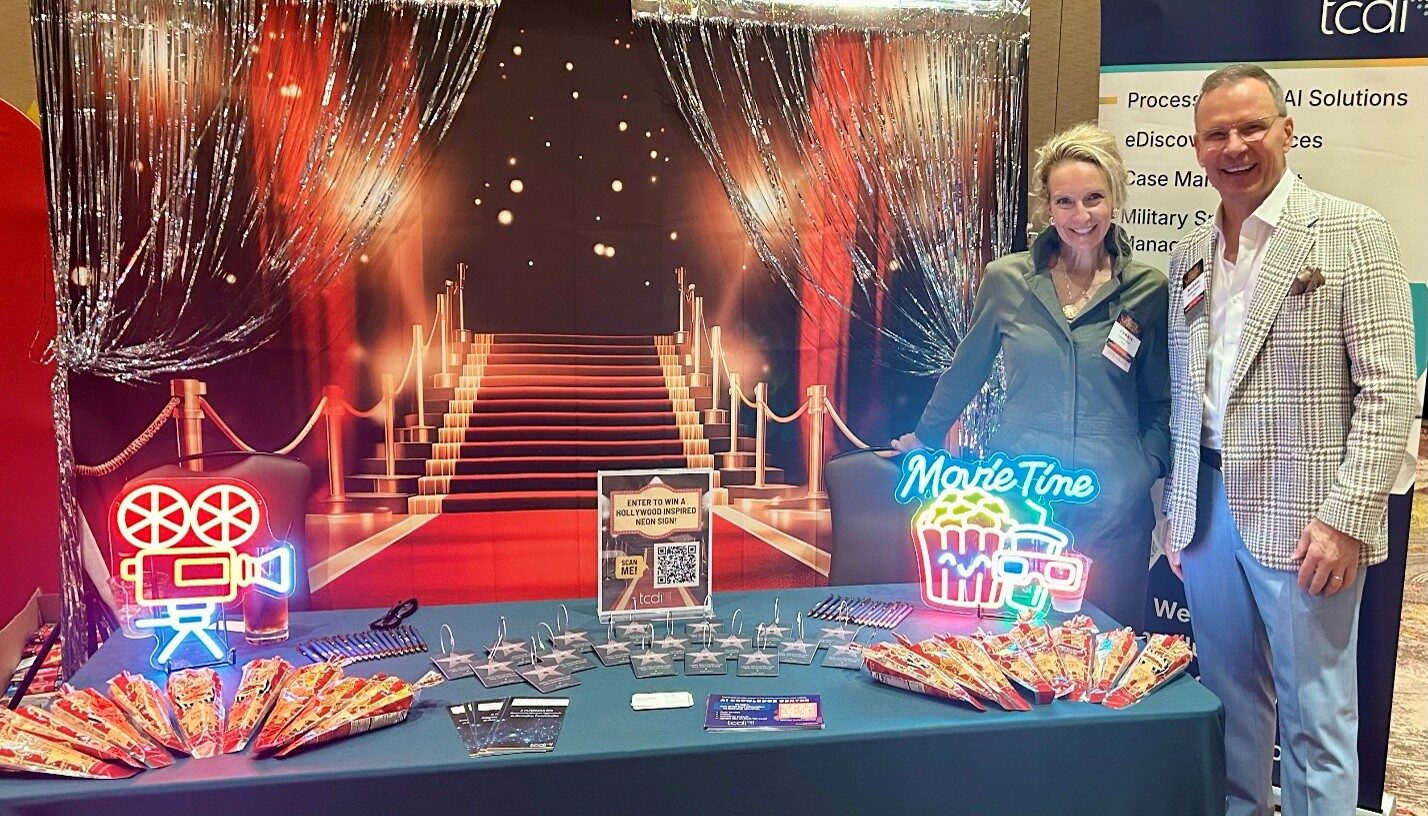
TCDI was proud to serve as a Silver Sponsor of ACC South Florida’s 16th Annual CLE Conference, held September 18 at the Seminole Hard Rock Hotel & Casino. This year’s theme, “Lights, Camera, Legal: In-House Counsel Take Center Stage,” brought together South Florida’s in-house legal community for a full day of timely CLE programming, practical discussion, and networking.
The day covered a wide range of issues facing corporate legal departments, including M&A strategy and the role of in-house counsel in major transactions, along with broader legal and business developments affecting today’s organizations. The program paired broad legal developments with practical guidance for in-house teams.
A Full House for GenAI
For TCDI, one of the highlights of the day was our panel, “The Fast and the Curious: How Legal Teams Are Accelerating with AI,” which drew a standing-room-only audience. The discussion focused on how legal teams are moving GenAI beyond experimentation and into practical, repeatable workflows.
I was proud to moderate this lively discussion featuring Kara Kelly DeRosa of ABB, Anaeli Petisco-Rojas of TelevisaUnivision, Lorell Guerrero of NBCUniversal Media, and TCDI’s own Chief Legal Process Officer, Caragh Landry. Together, they brought perspectives from corporate legal departments and legal service delivery, grounding the session in the work that legal teams are handling now.
Panelists discussed using AI to analyze contracts in connection with claims and using it to support settlement drafting. Legal operations applications ranged from improving matter intake to reviewing invoices and legal spend. The panel also considered the importance of summarizing investigation materials and finding patterns in litigation and employee relations data.
Our panelists emphasized that useful adoption begins with a clearly defined problem and the workflow designed around it. Reliable source data and human review remain essential, especially when the output informs legal analysis or contains privileged, confidential, or sensitive information. Throughout the hour-long session, the conversation centered around setting expectations for outside counsel’s use of AI and balancing the pressure to innovate with responsible oversight.
Practical Guidance Across the Agenda
The strong turnout reinforced something we continue to hear from legal teams: the conversation around AI has shifted from “Should we use it?” to “Where does it make sense, and how do we use it well?” That same theme ran throughout the day.
Sessions explored the growing impact of AI from several perspectives, including maintaining privilege and confidentiality when using AI tools and managing emerging risks associated with AI in employment decisions. The broader program also addressed many of the day-to-day challenges facing corporate legal departments, from conducting defensible workplace investigations and delivering effective performance feedback to navigating negotiations and the M&A process.
Data privacy and security was another significant focus, with sessions covering evolving state and federal requirements and the growing litigation risks associated with website tracking technologies. Attendees also heard updates on recent Supreme Court decisions, legislative developments, and changes affecting transactions and dealmaking.
Across these topics, a common thread emerged: in-house counsel are being asked to navigate increasingly complex legal and business challenges with technology while continuing to provide practical guidance to their organizations. The focus throughout the day was giving in-house counsel practical tools to work more strategically and effectively.
Closing the Curtain on 2026 ACC South Florida
Most people we spoke with were excited about AI. A common concern we heard was how these innovative tools could improve the systems they already use without forcing them to replace everything.
This also came up often in conversations about matter management. One attendee described having to open several systems each month and pull that information together to manually rebuild parts of a leadership report because the data was not tracked consistently. Many legal departments are still using spreadsheets for matters, outside counsel communication, tasks, and budgets. They want better reporting, but they are sceptical of adopting yet another tool that creates more work than it removes.
This is the type of problem CVUnity was built to help solve. It brings matter information, activity, budgets, and reporting from tools already in use into one place for the user. More broadly, it reflects how TCDI thinks about legal technology and the importance of starting with the team’s actual workflow and then looking for technology that supports it.
The Human Side Still Matters
ACC South Florida’s 2026 CLE Conference offered a day of candid discussions among in-house peers, which is what makes this event so valuable each year. Attendees left with useful ideas to bring back to their organizations and stronger relationships within the local legal community.
For me, the response to our GenAI session was especially encouraging. The questions from the room showed that legal teams are thinking carefully about where AI can improve their work and what responsible adoption requires. TCDI was glad to contribute to that conversation, and we look forward to continuing it with the legal professionals working through these decisions every day.
What We Brought Home
RLLB was one of the strongest legal conferences we have attended. Connie Brenton, Jeff Franke, and the LegalOps.com community have truly created a place where legal operations professionals, in-house counsel, paralegals, providers, and technical teams can talk honestly about what is or isn’t working now and what comes next.
Our biggest takeaway is that technology is moving quickly, but successful legal operations will still depend on the effectiveness of their people, processes, adoption, and measurable business outcomes.
We left Las Vegas with plenty of notes and many new relationships. We also feel like we have a better understanding of what in-house teams need now, along with even more useful questions to ponder, including a healthy dose of fear for what lies ahead (mostly thanks to Damien Riehl’s talk about building plaintiff, defence, judge, and jury agents).
We won’t get into all of that just yet! For now, we’re focusing on how the changes brought by AI are here to stay, and we are ready to tackle them together.

Connie Smith
Author
Share article:
Connie has enjoyed a lifelong career in the legal and technology industries. Connie is a graduate of The University of North Carolina School of Law and The University of North Carolina – Kenan-Flagler School of Business. Her experience as an lawyer in private practice and in-house counsel provides a unique and valued perspective when evaluating the individual needs of each client and project. Learn more about Connie.