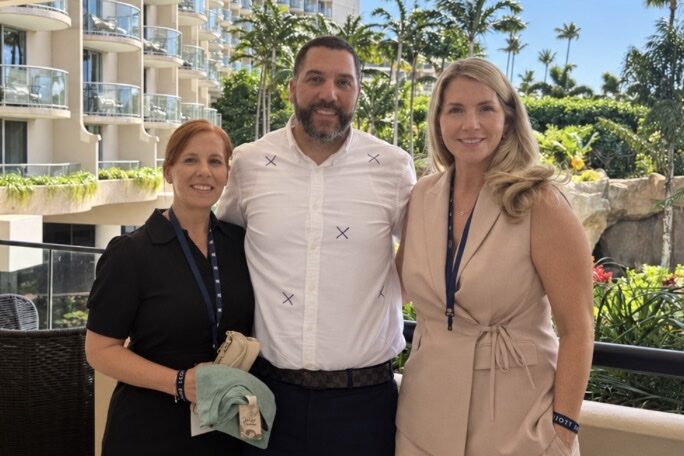
EDI celebrated its 20th anniversary by taking this year’s Leadership Summit to Maui, marking the event’s first time outside the continental United States. TCDI’s Bill Johnson, Caragh Landry, Eric Toder, and Ginny Gonzalez joined peers at The Westin Maui Resort & Spa, Ka’anapali, from October 13–15 for conversations about using AI in discovery work and what makes a strong partnership.
After the trip, we asked our team what stuck with them. Their reflections ranged from practical questions about putting AI to work to candid insights on earning trust and building partnerships that last.
People Came Ready to Talk
The chance to spend time with peers is a big part of what makes EDI valuable, and attendees made the most of it in Maui. Ginny and Eric both noticed how willing people were to ask questions and give one another their time. hose conversations continued over dinner and throughout the Summit’s informal gatherings.
What stood out to me was how committed everyone was to being there. You could tell people appreciated what it took to get to Maui and wanted to make the most of the opportunity. They came ready to participate, share, and really engage with one another.
EDI does a great job of creating an environment that is serious and substantive but still informal enough that people feel comfortable being open. In perfect EDI fashion, the Summit was incredibly well organized and executed, while still allowing plenty of time for meaningful conversations.
I don’t know if it was the casualness of Maui and the resort, but people were pretty open to talking. This was my first EDI Conference, so I can’t compare, but I felt that given the commitment that it took to attend the conference, the attendees that I encountered were generous with their interest and time to engage.
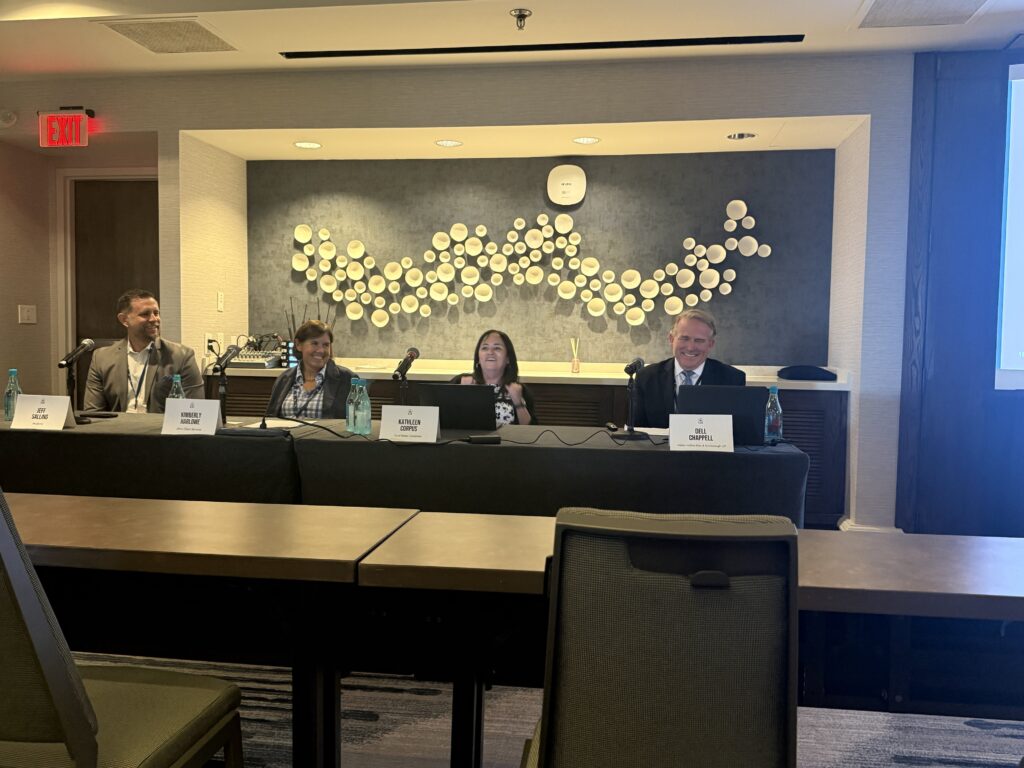
What do legal teams need from their partners, and how do those relationships hold up when the work gets difficult? TCDI’s Chief Legal Process Officer, Caragh Landry, explored those questions in the session she moderated, “Anatomy of a Partnership: How to Deliver Value & Build Relationships that Last.” Panelists Melissa Van Buhler of Stryker, Vernika Ross of Morgan Stanley, and Jennifer Phillips of Kenvue shared their perspectives on setting expectations and addressing problems early.
Our discussion looked at partnerships across corporate legal departments, internal teams, outside counsel, and service providers. We focused on agreeing on expectations before work begins, understanding who owns each decision, and defining value from the client’s perspective. We also explored how partners handle disagreement and respond when priorities or circumstances change.
We spent time on the harder conversations, too. How do you recognize early signs of trouble? When should you raise a concern about scope, budget, or timing? How do you reset expectations when a relationship stops working well? Those moments deserve as much attention as the success stories because they test whether partners take shared responsibility for the outcome.
Getting More Specific About AI
The AI conversations at this year’s Summit reflected a shift our team is seeing in its work with clients. Legal teams are asking more specific questions about where AI fits, including how to measure its benefits and when to trust the results.
I noticed there was absolutely a greater level of AI fluency, with more now looking to see how they can embrace it. In-house wants greater efficiency and demonstration of cost savings, and outside counsel are jockeying to position themselves as a trusted advisor on both the benefits and cost savings associated with its use.
The conversations felt much more practical this year. A year or two ago, people were still asking what AI might be able to do. Now the questions are about how to use it responsibly, where it adds meaningful value, and how to manage the risks that come with it.
There was a lot of discussion around hallucinations, validation, privilege, preservation, and professional responsibility. The concern is not that legal teams should avoid AI. It is making sure that attorneys and their outside partners do not rely on it so heavily that they stop applying their own experience and judgment.
I think there has to be a middle ground. AI can create real efficiencies, but it still requires strong processes, quality controls, and experienced people who know when to question the results.
The shift I see is toward implementation and accountability. This year’s program addressed validation, human oversight, and responsibility for AI-assisted decisions across the discovery process.
From my perspective, evaluating an AI tool means asking where human review belongs, how we identify errors, and what evidence supports the results. I also want teams to distinguish between producing an answer and having enough support to rely on the answer. For a litigation services provider, helping clients make those distinctions is an essential part of implementation.
Keeping the Context Around the Data
Finding relevant information is only part of the discovery challenge. As workplace conversations move across multiple platforms, legal teams also need to preserve the connections that give meaning to the information. Ginny and Caragh discussed why text and chat data and AI-generated content deserve careful attention at all stages.
I think teams risk underestimating the work required to preserve context across collaboration platforms and AI-generated content. The Summit’s sessions on preservation and Microsoft 365 brought those issues into focus.
My concern goes beyond locating a chat or meeting summary. During scoping, I would ask whether the collection preserves the surrounding discussion, linked documents, and information needed to understand how a summary was created. A readable export alone does not establish completeness. Teams should test those assumptions with legal and IT before relying on a collection approach.
Relevant information is no longer sitting neatly in email and traditional documents. It may be spread across Teams, chats, shared documents, cloud platforms, mobile devices, and now AI-generated content. The challenge is not just finding all of it. Teams also need to understand how the data is connected, who owns it, what needs to be preserved, and how to maintain the context around it.
Responsibility is often divided among Legal, IT, Privacy, Information Security, and outside partners. If those groups are not aligned early (and we have experienced this with our own clients), even the best technology will not solve the problem.
We asked Caragh and Ginny what they would encourage legal teams to do next. Both pointed to work that should happen early, before choosing a tool or committing to an approach. Their advice focused on understanding the goal first, and then moving on to asking the right questions and agreeing on how to evaluate and support its decisions.
My practical takeaway is to focus on defensibility in your use of AI in eDiscovery. Counsel should understand the task assigned to AI, the information the tool receives, and how the team will validate the results before relying on them.
Agree upfront on the review criteria, where legal judgment is required, and who approves the final decisions. Document the testing, material changes, and reasons for accepting the results. For me, the central question is whether counsel has enough evidence to explain and support the approach, including how the team addressed errors and protected privileged information.
Be clear about what you are trying to accomplish before selecting the technology or asking an outside partner to recommend a solution.
Corporate legal and legal operations teams should make sure their providers (and internal teams as well) understand their internal goals, existing processes, risk tolerance, and what success will actually look like for their organization. They should also expect to explain why a particular workflow or technology is the right fit and how the results will be tested and validated.
The strongest partnerships are built through honest conversations and a willingness to listen on both sides. Technology will continue to change, but that level of understanding and trust is what will lead to better decisions and better outcomes.
We came home from Maui with a lot to think about and an appreciation for the candid conversations that make EDI worth attending. We look forward to keeping those conversations going. If your team is working through questions about AI, discovery, or finding the right support, we’d welcome the chance to talk.
Mahalo to EDI for bringing everyone together to celebrate 20 years, and to Caragh’s fellow panelists, our dinner guests, and everyone who shared their experiences with us.
This blog was a compilation of thoughts from our team that attended Relativity Fest 2026.